Medical negligence: lessons from court decisions
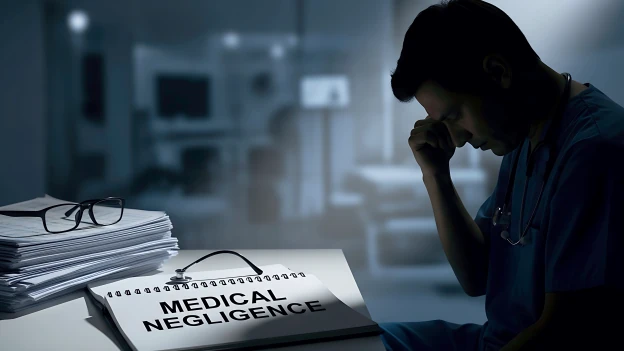
Medical negligence: lessons from court decisions
Published on March 8, 2026
Medical negligence remains an important and often complex area of South African law. When patients seek medical care, they trust healthcare professionals to act with skill, care and professionalism. When that trust is broken, the consequences can be serious for both patients and their families.
Recent court decisions in South Africa have highlighted how medical negligence claims are evaluated and what is required for a successful claim.
To prove medical negligence in South Africa, three things are needed:
This harm can be physical, financial or psychiatric. Emotional upset alone is not enough. Courts require proof of a medically recognised condition such as depression, anxiety, or post-traumatic stress disorder (PTSD).
Recent court rulings have reinforced these legal principles and clarified how compensation claims are handled.
In February 2026, the Supreme Court of Appeal delivered an important judgment concerning compensation for future medical expenses in state medical negligence matters. Justice Ashton Schippers confirmed that damages for future medical care must be paid as a lump sum. The court overturned a 2025 decision of the Bhisho High Court which had suggested that the Eastern Cape Department of Health could provide treatment through state facilities instead of paying monetary compensation.
The Supreme Court of Appeal held that requiring patients to return to the same public health system where negligence occurred could result in unequal treatment compared with patients receiving private care. The court also reaffirmed the long standing “once and for all” rule in South African law. This rule requires that all damages arising from a single incident be determined and awarded in one final amount.
Another significant decision was delivered by the North West High Court in Mahikeng in G.K.M v Lehurutshe Hospital and Another (2026). In this case, a mother buried a stillborn baby that was later discovered not to be her own. Hospital staff had mistakenly released the wrong child to the family. The error was acknowledged by the hospital and evidence before the court confirmed that the staff involved had been negligent.
Despite this, the court dismissed the claim for damages. Acting Judge J.T. Maodi explained that negligence alone is not enough to succeed in a claim for emotional shock. The plaintiff also had to prove that the incident caused a medically recognised psychiatric injury.
The plaintiff testified that the experience caused her trauma and ongoing headaches. However, no expert psychiatric evidence was presented to confirm that she suffered from a diagnosable psychological condition. Without such evidence, the court found that the claim could not succeed.
This judgment highlights an important legal principle. While courts recognise the deep emotional impact that traumatic events can have, the law distinguishes between natural grief and a diagnosable psychiatric injury. Compensation is only awarded where the harm can be medically identified and proven.
Medical negligence cases often involve complicated medical and legal questions. They usually require detailed evidence from medical professionals and expert witnesses. For this reason, individuals who believe they have been harmed by medical negligence should seek legal advice as soon as possible.
Understanding how courts approach these matters can help patients and families better understand their rights and the legal standards that apply in medical negligence claims.
If you believe that medical negligence has caused harm to you or someone you care about, contact us. Our team can help you understand your rights and whether you may have a valid claim.

M.W. Attorneys
Why you should choose us
At MW Attorneys we believe that quality of services counts and not quantity. We believe in sincere and continuous communication with our clients and we strive to deliver services of the highest quality, as we have been doing since 1997. We regard our clients as our most important asset!
MW Attorneys has a proven track record since:
1900
